Caballo Viejo (Old Horse)
Visual Art – Gisela Romero
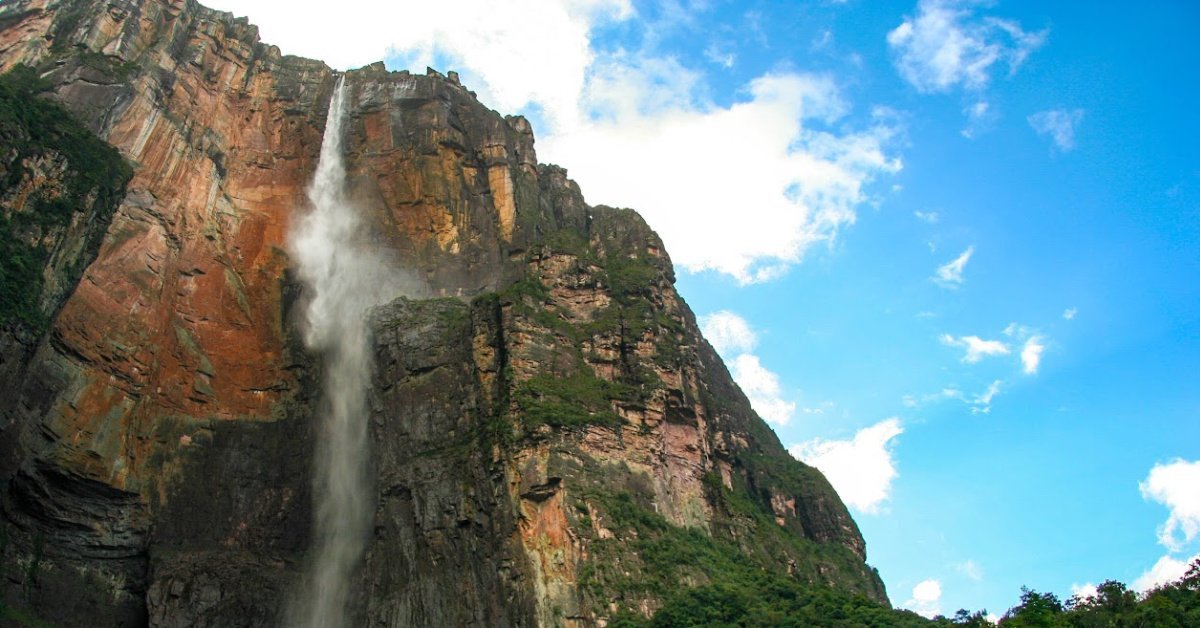
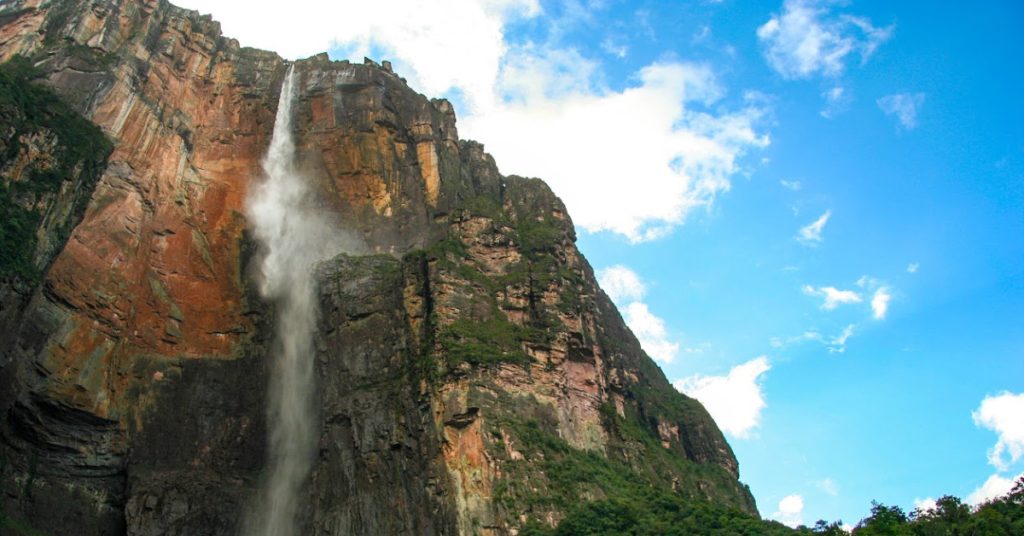
- Title background picture: Angel Falls, the world’s highest uninterrupted waterfall, cascades from the towering Auyán-Tepui in Venezuela’s Gran Sabana. Named after American aviator Jimmie Angel, who first flew over it in 1933, the falls are known locally as Kerepakupai Merú, meaning ‘waterfall of the deepest place’ in the Pemon language, reflecting the deep connection between the region’s indigenous people and their land.”
Venezuela’s culture is a vibrant blend of indigenous, African, and Spanish influences, shaped by centuries of history and diverse traditions. From the lively rhythms of joropo music to the colorful celebrations of festivals like Carnival, the country’s artistic expressions reflect the soul of its people. Venezuela’s cultural heritage is deeply rooted in its land, with a rich tapestry of folklore, music, dance, and visual arts that celebrate both the beauty of nature and the strength of community. At the heart of this tradition is Venezuelan folk music on guitar, a style that captures the spirit of the nation and connects its culture to the world.
Stay Connected: Join the Journey of Cultural Harmony
ARTIST INTERVIEW: Gisela Romerowebsite
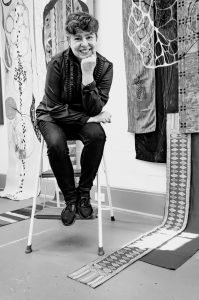
Question: Can you tell us a bit about your background and how you became an artist?
I’ve been an artist all my life. From a very young age, living in Caracas, Venezuela, my parents enrolled me in painting and music classes. Once I had to choose a profession, I came to the United States to graduate with a Bachelor of Arts from the California College of Arts in California, and years later, I completed my Master of Fine Arts at Pratt Institute in New York.
Since then, in 1992, I have worked as a visual artist, first from Venezuela and now, since 2017, from the United States.
Q: What have been some pivotal moments or influences in your career so far—whether personal, cultural, or artistic?
I have had many pivotal moments in my career and influences from other artists that have helped me along the way. Having had the opportunity to travel and see live pieces that moved me greatly has also been important in the development of my career. Having gone to artist residencies in different parts of the world such as Thailand, Italy or Norway, has been a great experience for me.
Among the wonderful pieces you’ll encounter in museums are those by artists such as Anselm Kiefer’s large-scale paintings about humanity, altarpieces by Fra Angelico, “The Garden of Earthly Delights,” by Flemish painter Hieronymus Bosch, Picasso’s Guernica, and Goya’s “The Disasters of War”, prints. All unforgettable.
Personally, my solo exhibition “A CONSTANT GOODBYE” at the Art & History Museum of Maitland in 2024 has been one of the highlights of my career.
Q: Venezuela has a rich visual and musical culture. In what ways has growing up in Venezuela shaped your artistic voice?
The visual richness of Venezuela has undoubtedly been a part of my artistic expression. It’s impossible to be from that country and not have a white light inside that gives the colors a brightness that contrasts in a very particular way. Also, in Venezuela there is a tradition of kinetic art and abstract art that appears in some way in my work. Likewise, Venezuelan music, intricate and lively, has a place in my work; the lines of my drawings have a lot to do with the complex rhythm of some genres of traditional Venezuelan music.
Q: Many of your works seem to draw from Venezuelan identity, folklore, and natural landscapes. Where do you find inspiration for these recurring elements?
More than to draw from Venezuelan identity and folklore, my work is universal and has more to do with shapes I find along the way, from natural forms to the stains left by humans everywhere. In many of my works, I respond to the circumstances I experience at a given moment, whether it’s the beauty of a flower or the difficulties of people immigrating from one country to another.
Q: Are there any artists—visual, musical, or otherwise—that have profoundly influenced your artistic philosophy or technique?
Among other artists, Sigmar Polke has influenced me because of his inventive paintings and photographs where he used non-traditional materials, Agnes Martin with her philosophy of life and how to apply it to art, and Jim Dine for his gigantic free drawings.
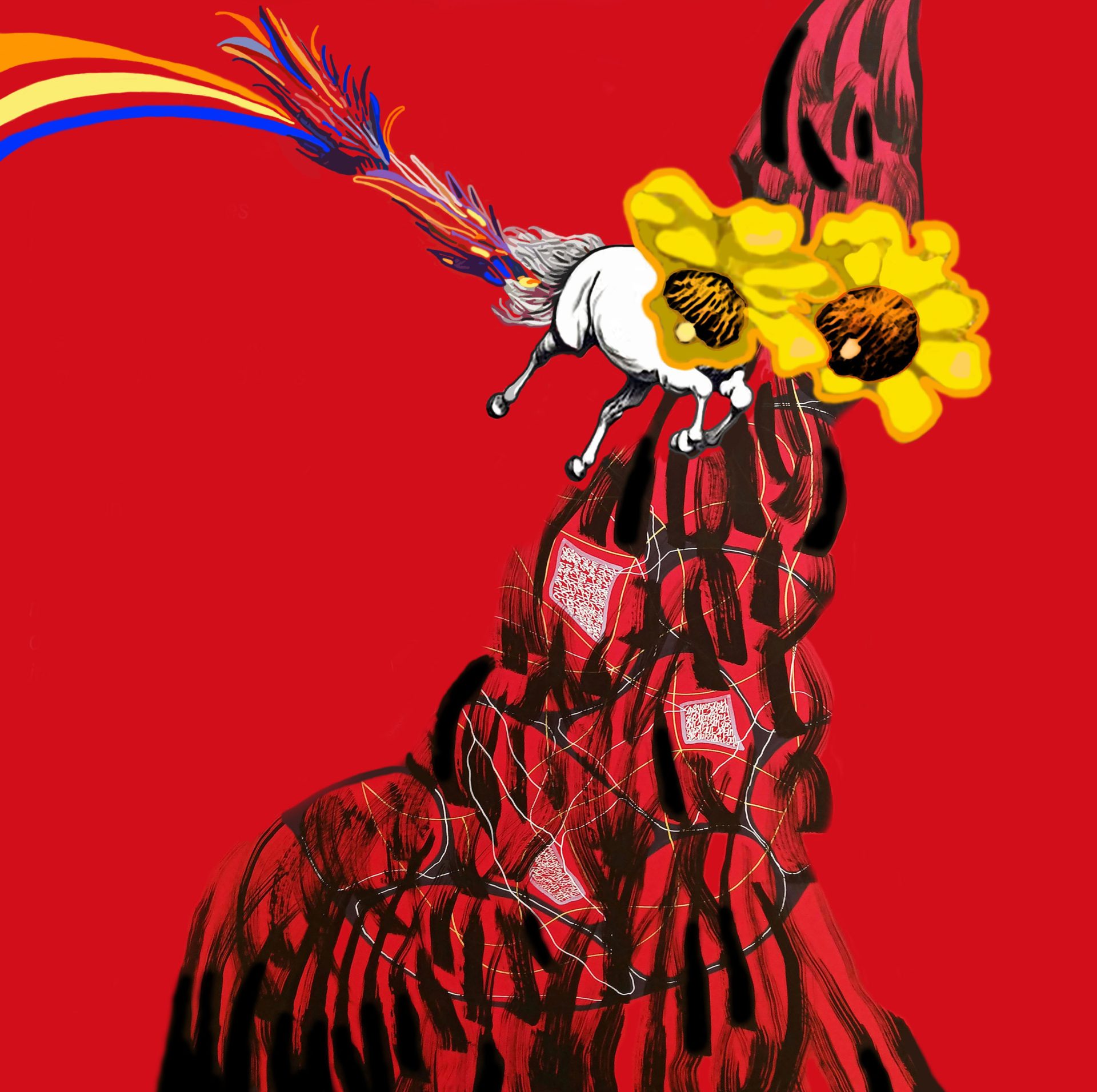
Q: What inspired your vision for the cover art of “Caballo Viejo”? Was there a particular story, image, or emotion from the song that guided you?
When faced with the challenge of this project, I wrote a poem about the song and from there I took images for the final work:
Despite the difficulties,
there will always be someone in love
There will be hearts racing
through caravans and walls
There will be beauty, plains, joropo, sounds,
the Orinoco Birds tangling in the sky
making love while flying over a land
smelling of immortality
Old age and youth will meet among the flowers
It will always be today and here
as long as two souls in a hurry meet
Gisela Romero, April 2025
Q: “Caballo Viejo” is deeply connected to Venezuelan folklore and Simón Díaz’s legacy. How did you reflect that cultural heritage in your visual choices?
I use the colors of the Venezuelan flag, in a subtle way, but they are represented in the image. I listened to the song again many times and in different versions to get into the emotion that Simon Diaz put into it.
Q: Your cover design contains rich textures, colors, and possibly symbolic elements. Can you share the meaning or intention behind some of these details?
I use a symbol that I have already used in other previous pieces, which represents people walking, migrating from one place to another (The black brushstrokes). The horse’s head is the encounter with the yellow flowers (“The guamachito blooms”), representing the love for a young woman, and from the horse’s tail come feathers of a Patriotic Macaw, which is a Venezuelan bird found in the plains.
Q: How does this piece connect with themes you often explore in your work?
In my work, I explore different emotions, and love is one of them. I connected with that emotion and added the sadness of goodbyes. I mixed the stains representing people who emigrate with the pain of heartbreak, like a runaway old horse falling in love with a young flower that is, despite love, unattainable.
Q: What was your process like for creating the cover—from your first ideas to the final artwork? Did working with music influence your approach?
Yes, listening to the song was essential, then I wrote the poem and then decided what images to put on the final version of the cover.
Q: What artistic directions or concepts are you currently exploring in your work?
I’m currently working on a body of work for a solo show in Orlando, it’s about people faces drawings that reflect different emotions.
Q: Are there any upcoming projects, collaborations, or exhibitions you’re particularly excited about?
I have been invited by “Art in the Chambers” for a solo show “WE”, at the Orange County Administration Center, downtown Orlando. The Opening will be on Monday, September 29, at 5:30 pm. The show will continue until January 2026.
Q: How do you see your art evolving in the future? Are there new techniques or mediums you’d like to experiment with?
I hope to continue experimenting, making drawings, installations, and assemblages that can be shared with people in different and exciting venues.
Q: Do you see a role for Venezuelan art—and your own work—in fostering cultural connection and understanding across borders?
Of course, and even more so now that there are millions of Venezuelans living in different countries, among whom are wonderful artists who will surely give everything they can in their new homes from their artwork. We are all contributing to making Venezuelan culture known throughout the world.
Q: What advice would you give to emerging Venezuelan artists who want to stay rooted in their culture while creating for an international audience?
For work to go from local to universal, I would tell them to stay rooted but experiment with different ways of seeing and doing until they find their own voice.




Caballo Viejo: A Symbol of Venezuelan Folk Music on Guitarstream music
Composer
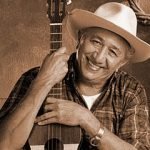 Simón Díaz (1928-2014), one of Venezuela’s most beloved musicians and cultural icons, is renowned for his ability to capture the heart of the country’s folk traditions through his songs. A master of the llanero style, rooted in the pastoral life of the Venezuelan plains, Díaz brought international attention to Venezuelan music.
His iconic song Caballo Viejo is a timeless classic that transcends borders and embodies the sound of Venezuelan folk music on guitar. With its poetic lyrics about love, aging, and passion, the song uses the metaphor of an old horse rediscovering its youthful spirit. Caballo Viejo has been covered and celebrated worldwide, symbolizing the enduring vitality of Venezuelan culture.
Arranger
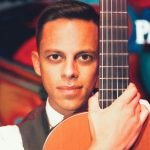 Pablo Briceño is a highly skilled Venezuelan guitarist and composer known for his deep connection to the traditions of Latin American music.His work blends classical techniques with the vibrant rhythms and melodies of his homeland, often highlighting the beauty of Venezuelan folk music on guitar.
With a background rooted in both performance and composition, Briceño’s artistry showcases his passion for the tango, Venezuelan folk music, and other Latin genres. As a collaborator, he brings a dynamic and expressive style to his performances, making him a sought-after musician in both contemporary classical and traditional music circles.
Musician

Sam Desmet – classical guitarist from Belgium, known for blending tradition with innovation, using music to explore and celebrate cultural diversity through collaborations with artists from various disciplines.
Venezuelan Folk Music on Guitar and Cultural Identity
In this project, Venezuelan folk traditions are reimagined through a unique blend of classical and popular elements. The arrangement by Pablo Briceño features the guitar in Venezuelan folk music alongside maracas, an essential part of the joropo rhythm, and cajón, a Peruvian instrument often embraced in modern South American interpretations.
Performed by Sam Desmet on classical guitar with percussion by Francisco Paz, the piece highlights how these traditions continue to evolve while staying rooted in Venezuela’s rich musical heritage.
The Role of the Guitar in Venezuelan Folk Music
The guitar holds a central place in Venezuelan folk music, serving both as a rhythmic and harmonic foundation. In styles like joropo, the instrument provides the driving energy that supports the harp and cuatro, while in serenades and folk songs it carries lyrical melodies full of expression.
Its versatility allows musicians to move between accompaniment and solo passages, making the guitar not just an instrument but a storyteller within Venezuelan traditions. This dual role has helped the guitar become one of the most recognizable symbols of Venezuela’s musical identity.
Song Lyrics
Caballo Viejo
Cuando el amor llega así, de esta manera, uno no se da ni cuenta, el caraotal reverdece y el guamanchito florece y la soga se revienta.
Cuando el amor llega así, de esta manera, uno no se da ni cuenta, el caucatal reverdece y el guamanchito florece y la soga se revienta.
Caballo le dan sabana porque está viejo y cansao, pero no se dan ni cuenta que un corazón amarrao cuando le sueltan la rienda es caballo desbocao.
Y si una potra alazana caballo viejo se encuentra, el pecho se le desgrana no le hace caso a falsetas y no le obedece al freno ni lo paran falsas riendas.
Cuando el amor llega así, de esta manera uno no tiene la culpa, quererse no tiene horario, ni fecha en el calendario cuando las ganas se juntan.
Cuando el amor llega así, de esta manera, uno no tiene la culpa, quererse no tiene horario, ni fecha en el calendario cuando las ganas se juntan.
Caballo le dan sabana, ya tiene el tiempo contao, y se va por la mañana con su pasito apurao, a verse con su potranca que lo tiene embarrascao.
El potro da tiempo al tiempo porque le sobra la edad, caballo viejo no puede perder la flor que le dan, porque después de esta vida no hay otra oportunidad.
Cuando el amor llega así, llega así, de esa manera…. Cuando el amor llega así, llega así, de esa manera… Cuando el amor llega así, llega así, de esa manera…
Cuando el amor llega así, llega así, de esa manera…
Caballo le dan sabana porque está viejo y cansao…
Caballo le dan sabana porque está viejo y cansao…
Caballo le dan sabana porque está viejo y cansao…
Caballo le dan sabana porque esta viejo y cansao…
Quererse no tiene horario, ni fecha en el calendario… caballooooo
Quererse no tiene horario, ni fecha en el calendario… caballooooo
Quererse no tiene horario, ni fecha en el calendario… caballooooo
Quererse no tiene horario, ni fecha en el calendario… caballooooo
Bamboleo, bambolea Porque mi vida, yo la prefiero vivir asi
Bamboleo, bambolea Porque mi vida, yo la prefiero vivir asi
Old Horse
When love comes like this, in this way you don’t even realize it; the black beans turns green again, and the guamacho flowers and the rope snaps
When love comes like this, in this way you don’t even realize it; the black beans turns green again, and the guamacho flowers and the rope snaps
Horse is given a sheet ’cause he’s old and tired but they don’t even realize that a tied up heart when the reins are released turns into a wild horse
And if old horse finds a chestnut filly his heart is unstrung; he’ll ignore the bridle
and he won’t obey the bit, and false reins won’t stop him.
When love comes like this, in this way no one is to blame, love doesn’t keep a schedule nor a date on the calendar when desires come together
When love comes like this, in this way no one is to blame, love doesn’t keep a schedule nor a date on the calendar when desires come together
Horse is given a sheet and his days are numbered and he leaves in the morning taking little hurried steps to meet up with the filly that has him tied up in knots
The colt gives time to time ’cause he’s more than old enough, Old horse can’t lose the flower given to him, ‘Cause after this life there’s no other opportunity.
When love comes like this, comes like this, in this way…
When love comes like this, comes like this, in this way…
When love comes like this, comes, like this, in this way…
When love comes like this, comes, like this, in this way…
Horse is put out to pasture ’cause he’s old and tired
Horse is put out to pasture ’cause he’s old and tired
Horse is put out to pasture ’cause he’s old and tired
Horse is put out to pasture ’cause he’s old and tired
Loving each other has no schedule, or date on the schedule…horse…
Loving each other has no schedule, or date on the schedule…horse…
Loving each other has no schedule, or date on the schedule…horse…
Loving each other has no schedule, or date on the schedule…horse…
I swing, you swing ’cause I prefer to live my life this way
I swing, you swing ’cause I prefer to live my life this way
Through “Caballo Viejo” and the artistic collaborations around it, we celebrate how Venezuelan folk music on guitar continues to inspire new generations and foster cultural connection worldwide.
share article
Thank you!
I extend my deepest gratitude to everyone who made this project possible
To United Arts of Central Florida, thank you for believing in me as an artist and awarding me the Community Project Grant that brought this vision to life. I am also profoundly grateful to the talented composers, arrangers, and visual artists who have enriched this journey with their creativity and dedication. To my mentors, colleagues, and the audiences who support and inspire me, your belief in this project means the world.
A special thanks to my wife Elizabeth and daughter Layna. Your unwavering support and belief in me, especially when challenges seemed insurmountable, have been my foundation. This project wouldn’t exist without you standing by my side every step of the way.